
Vibe Coding Problems Production Exposes
Vibe coding problems production teams hit: auth gaps, broken data rules, billing edge cases, weak deployments, and how to prevent them.
Build My App Fast · Jul 17, 2026 · 12 min read
The most common vibe coding problems production exposes are not mysterious: the app works on the happy path, then breaks when real users create messy data, miss steps, refresh pages, change subscriptions, or hit permission boundaries. Vibe-coded apps often look impressive in a demo because the generated code satisfies the visible prompt. Production requires the invisible work too: security rules, migrations, error handling, billing reliability, deployment configuration, and maintenance decisions.
That does not mean AI-assisted coding is useless. It means you need to know where the demo ends and the production system begins. A prototype can be generated quickly. A production app needs deliberate engineering.
We build fixed-price apps on Next.js, React, Supabase, Stripe, Tailwind, Resend, and Vercel. In that stack, the same pattern shows up again and again: the code can render screens, but production readiness comes from the parts that are easy to skip because they are not visible in the first walkthrough.
The vibe coding problems production exposes first
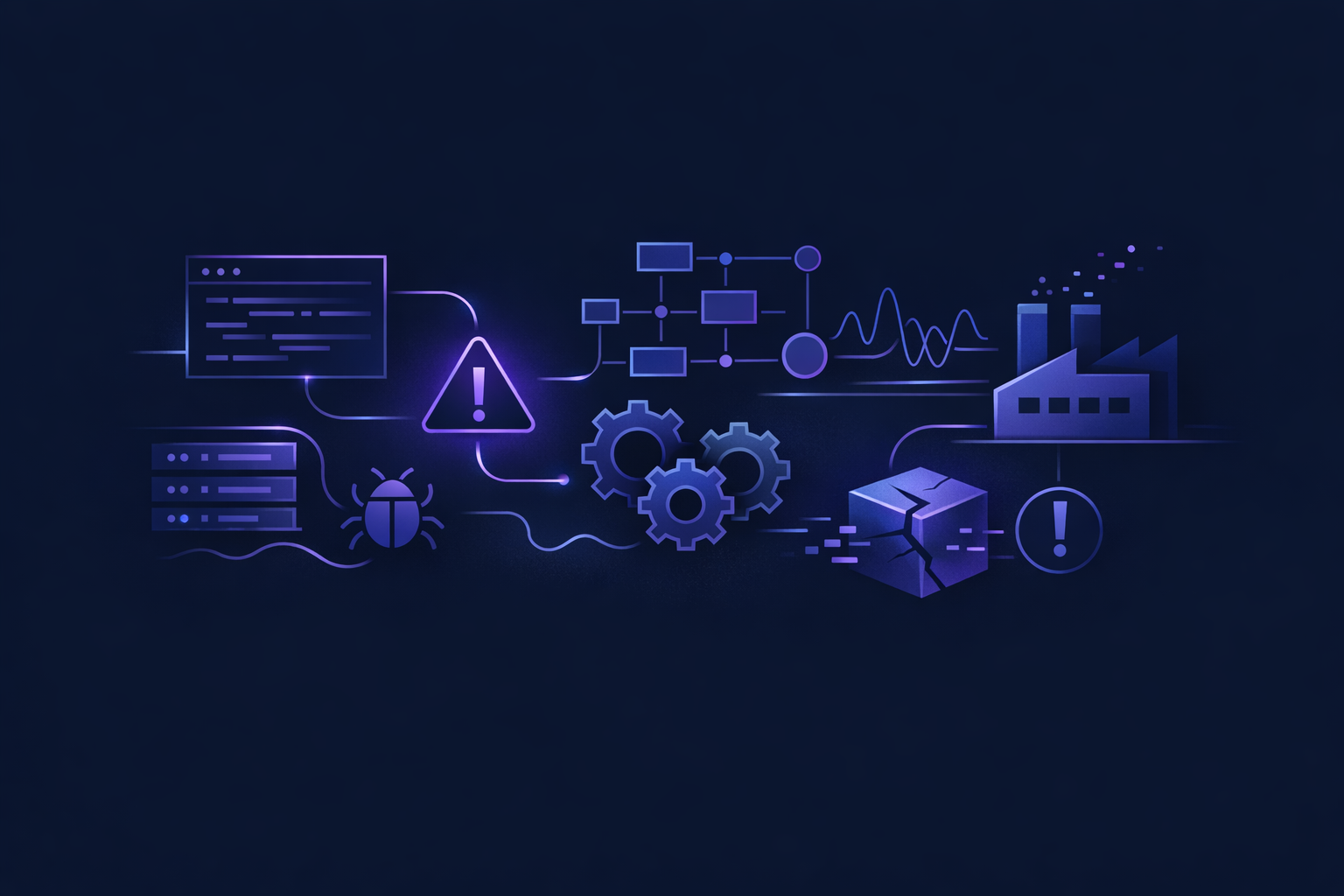
The first production failures are usually not dramatic server explosions. They are small assumptions that compound.
A vibe-coded app may assume every user has a complete profile. It may assume a database insert always succeeds. It may trust a client-side user ID. It may update a subscription status immediately after checkout instead of waiting for a verified webhook. It may work with one test account but fail when an admin, customer, and anonymous visitor all need different access.
Those problems are easy to miss because they do not block the initial demo. You click through the expected route, the app responds, and it feels done. But production is not one route. Production is a set of states:
- New user with no records yet
- Returning user with stale data
- User with cancelled subscription
- Admin viewing another user’s record
- Failed payment
- Duplicate form submission
- Slow network request
- Deleted related record
- Missing environment variable
- Email delivery failure
- Browser refresh halfway through a flow
A real app has to decide what happens in each state. If the code was produced by prompting toward the visible UI, those decisions are often absent or inconsistent.
For a deeper comparison of where AI-generated app building helps and where experienced engineers matter, see Vibe Coding vs Real Engineers.
Why demo-ready apps break when real users arrive
A demo is controlled. Production is adversarial, even when users are not trying to break anything.
The main difference is that production users do not know the script. They upload the wrong file type. They open two tabs. They click back. They abandon checkout. They sign in with a different email than expected. They paste unexpected text into inputs. They use mobile browsers. They trigger timing issues that never appeared in local testing.
AI-generated code often optimizes for completing the requested feature, not for defending the feature against every realistic path. That creates several predictable breakpoints.
Client-side trust where server-side checks are required
A common failure is putting too much trust in the browser. If the app passes a user ID, role, price ID, or organization ID from the client and the server accepts it without verification, the UI may work but the security model is weak.
In a Supabase app, this is where Row Level Security matters. Policies need to enforce who can read and write each row. The official Supabase Row Level Security documentation is worth reading because RLS is not a cosmetic setting. It is the database-level boundary between users.
Billing flows that update too early
Stripe checkout is another place where demo-ready code can be misleading. The user clicks a button, lands on a checkout page, pays, and returns to the app. In a demo, it is tempting to mark the account as paid on the return URL.
That is not production-safe. The reliable source of truth is the webhook event from Stripe. Webhooks also need signature verification, idempotency handling, and a plan for retries. Stripe’s official webhook documentation explains the model clearly.
If the app has subscriptions, a production build needs to handle successful checkout, failed renewal, cancellation, plan changes, and delayed webhook delivery. The button is the easy part. The lifecycle is the product.
Databases without a real model
Many vibe-coded apps start with whatever table structure was generated first. That can be fine for a throwaway prototype, but production data models need constraints.
A real data model answers questions like:
- Which records belong to which user or organization?
- Can a record exist without its parent?
- What happens when a user is deleted?
- Which fields are required?
- Which values must be unique?
- Which changes need an audit trail?
If those choices are vague, the app will accumulate inconsistent data. Once bad data exists, every feature has to work around it.
No deployment discipline
An app that runs locally is not deployed. Production needs environment variables, build settings, database migrations, preview environments, logs, error visibility, domain configuration, and rollback thinking.
Vercel makes deployment simpler, but it does not remove the need to know what is being deployed. If a generated app depends on local assumptions or undocumented setup steps, the next deploy can break the app even if the code looked correct.
Common production failure modes and prevention
Here is a practical checklist we use when looking at whether an app is actually ready for users.
| Area | How vibe-coded apps break | How to prevent it |
|---|---|---|
| Authentication | UI shows logged-in state, but server routes do not enforce it | Verify sessions server-side and protect every sensitive route |
| Authorization | Users can access records by changing an ID | Add database policies, ownership checks, and role-based rules |
| Database design | Tables exist, but relationships and constraints are weak | Define schema intentionally, with required fields and foreign keys |
| Forms | Empty, duplicated, or malformed submissions create bad data | Validate on both client and server, and handle duplicate submits |
| Payments | App marks users paid before Stripe confirms | Use verified webhooks as the source of truth |
| Success messages show even if email fails | Track send results and design retry or support paths | |
| AI features | Prompts work in tests but fail on edge inputs | Add guardrails, limits, fallbacks, and logging |
| Deployment | Works locally but fails on Vercel | Document env vars, run builds, and test production-like deploys |
| Errors | Users see blank screens or raw exceptions | Add user-safe error states and server-side logging |
| Maintenance | Nobody understands the generated structure | Refactor into clear modules before expanding |
None of this is exotic engineering. It is the normal work that separates software from a clickable mockup.
How to prevent vibe coding problems production users would find
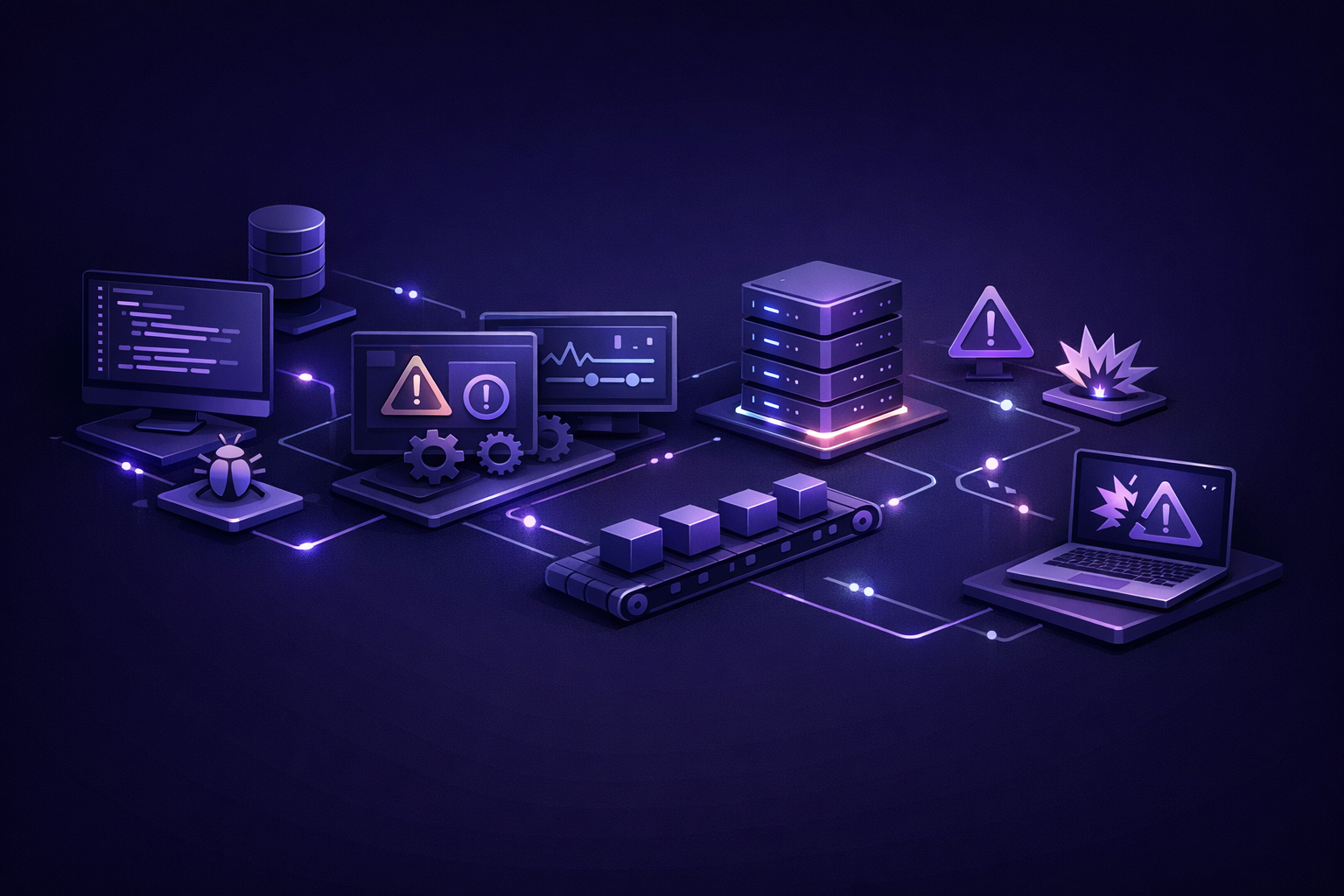
The best prevention is to stop treating the first working version as the final version. Use it as a draft, then harden it deliberately.
1. Define the product rules before adding more screens
Before writing more code, list the rules the app must enforce. For example:
- Who can create an account?
- What can a free user do?
- What can a paid user do?
- What can an admin do?
- What data is private?
- What happens when payment fails?
- What must be true before a record is saved?
If those rules are not written down, they will be implemented accidentally. Accidental rules are where production bugs come from.
This is also why validation matters before build scope. If you are not sure the product is worth building, start smaller and read How to Validate a Startup Idea Before You Build Anything before turning a rough prototype into a full app.
2. Treat the database as part of the product
The database is not just storage. It is where ownership, constraints, and business rules become durable.
For a Supabase app, production hardening usually includes:
- Clear table ownership
- Foreign keys for relationships
- Required fields where appropriate
- RLS policies for user-owned data
- Admin access rules
- Migration files instead of undocumented manual changes
- Seed data for testing core flows
If the app has organizations, teams, workspaces, subscriptions, or shared records, the schema needs extra care. Those are the places where a quick generated structure often runs out of road.
3. Move sensitive logic to the server
A production Next.js app should not rely on client-side checks for sensitive behavior. The browser can hide a button, but it cannot enforce the business rule. Server actions, route handlers, or API routes should verify the session, validate input, and perform privileged operations.
This matters for:
- Creating paid resources
- Changing roles
- Updating subscription status
- Reading private data
- Sending transactional email
- Calling AI APIs
- Creating Stripe checkout sessions
If a user can manipulate a request from the browser and gain access they should not have, the app is not production-ready.
4. Build the unhappy paths
Every important feature needs a failure state. That does not mean overengineering. It means the user should never be stranded.
For example:
- If login fails, show a useful message.
- If checkout is pending, show a pending state.
- If an email cannot be sent, log it and tell the user what to do next.
- If an AI response fails, provide a retry path.
- If a database write fails, do not pretend it succeeded.
A lot of vibe-coded apps have success paths only. Production users need the rest.
5. Deploy early, then test the deployed app
Local testing is not enough. Put the app on Vercel early and test the real deployed flow with production-like environment variables.
For our builds, that means we want to see the app running before final payment. The client should not have to infer progress from screenshots or status updates. Working software is the evidence.
This is also where timeline expectations matter. If you are comparing options, How Long Does It Take to Build an MVP? gives a realistic view of scope, speed, and tradeoffs.
What we do differently at Build My App Fast
We are not anti-AI. We use modern tools where they help. The difference is that real engineers own the production decisions.
Our standard stack is intentionally boring in the right way:
- Next.js and React for the application
- Supabase for auth and Postgres
- Stripe for payments and subscriptions
- Tailwind for UI
- Resend for transactional email
- Vercel for deployment
That stack is fast, but it is also production-capable when used correctly. The important part is not naming the tools. It is integrating them with the right boundaries.
Our fixed tiers are designed around scope:
| Tier | Price | Timeline | Best fit |
|---|---|---|---|
| Proof of concept | $1,000 | 2–4 days | Clickable proof of concept to test the idea |
| Real app | $5,000 | 4–6 days | Full app with logins and a database |
| Launchable MVP | $10,000 | 7–10 days | Advanced MVP with subscriptions, integrations, or AI features |
The client owns the code. The price and timeline are fixed. The client sees working software before final payment. That combination matters because it reduces the ambiguity that often surrounds rushed app builds.
If you are comparing whether to patch a generated prototype, hire a freelancer, or use a fixed-price build, How Much Does It Cost to Build an MVP in 2026? is a useful reference point.
If you already have a vibe-coded app
You do not always need to throw it away. But you should not assume it is close to launch just because it looks close.
Start with an audit:
- Can a user access someone else’s data by changing a URL or ID?
- Are protected actions verified on the server?
- Are database policies enabled and tested?
- Are Stripe events handled through webhooks?
- Are environment variables documented?
- Does the app build cleanly on Vercel?
- Are errors logged somewhere useful?
- Can a new engineer understand the structure?
If the answer is mostly yes, the app may need hardening. If the answer is mostly no, rebuilding the foundation may be faster than patching. The dangerous middle ground is continuing to add features on top of a weak base.
A practical approach is to freeze new features, fix the data model, secure auth and authorization, deploy a stable version, then resume product work. It feels slower for a moment, but it prevents the much slower work of debugging production incidents later.
FAQ
Can vibe coding ever be production-ready?
Yes, but usually not by itself. AI-assisted code can be part of a production workflow when an experienced engineer reviews the architecture, security, data model, deployment, and edge cases. The risk is treating generated code as finished because the UI works.
What are the most serious vibe coding problems production teams should check first?
Start with authentication, authorization, database access, payment handling, and deployment configuration. Those areas can create security issues, data leaks, broken billing, or unreliable launches. UI polish can wait; trust boundaries cannot.
Is it cheaper to fix a vibe-coded app or rebuild it?
It depends on the foundation. If the code is organized and the data model is close, hardening may be enough. If auth, database ownership, and billing are all improvised, rebuilding the core can be faster and safer than patching every symptom.
How do I know if my app is a prototype or a real MVP?
A prototype proves the concept. A real MVP can support actual users through login, data persistence, errors, permissions, deployment, and the main business workflow. If the app only works when you follow the perfect demo path, it is still a prototype.
If you want a fixed-price production-ready app built by engineers who can move fast without relying on guesswork, apply here.